
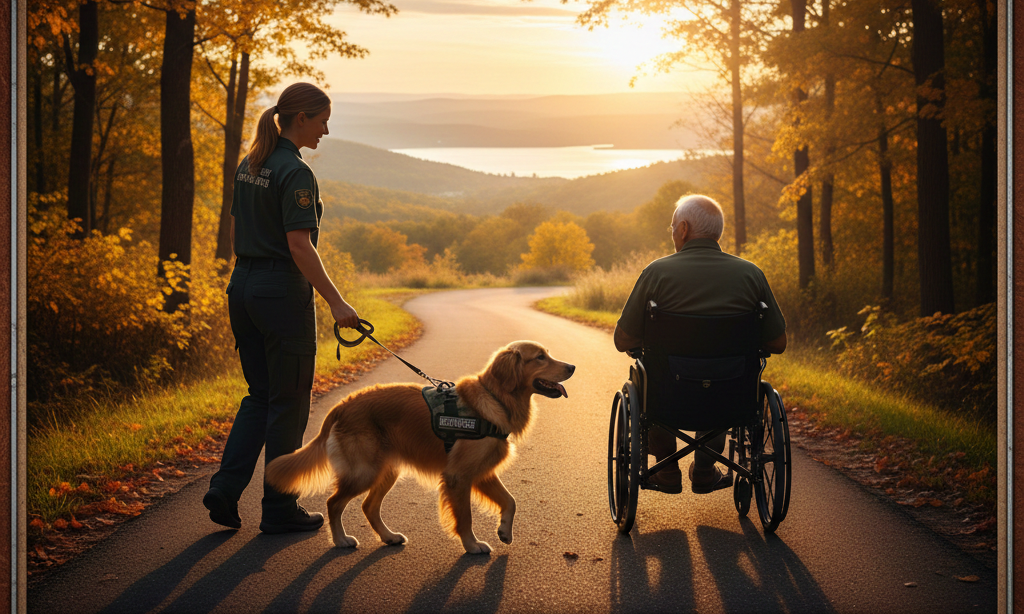
Service dogs for veterans and first responders provide long-term emotional and medical support that restores independence, confidence, and quality of life. These highly trained dogs help heroes manage PTSD, anxiety, and medical conditions while rebuilding daily stability and trust. Long after training is complete and placement occurs, the impact of a service dog continues to grow. These dogs help their handlers reclaim independence, rebuild confidence, and reconnect with their families and communities. At Canines for Heroes, we witness every day how a trained service dog can reshape a life over the long term.
This is not a short-term solution. It is a lifelong partnership built on trust, consistency, and purpose.
Life Before Service Dogs for Veterans and First Responders
Many veterans and first responders struggle silently for years before seeking support. Trauma does not always appear immediately, and symptoms often intensify over time.
Common challenges include:
Avoidance of public spaces
Difficulty sleeping due to nightmares
Heightened anxiety or panic attacks
Emotional withdrawal from loved ones
Fear of medical emergencies
These challenges can limit independence and strain relationships, leaving individuals feeling isolated and overwhelmed.
How Service Dogs for Veterans and First Responders Create Lasting Change
One of the most powerful benefits of a service dog is restored independence. Tasks that once felt impossible become manageable again.
Service dogs help by:
Providing grounding during anxiety or panic
Offering medical alerts before emergencies
Supporting safe movement in public places
Encouraging daily routines and structure
For many handlers, the presence of a service dog reduces fear and restores confidence, allowing them to re-engage with daily life.
How Service Dogs Support PTSD Recovery for Veterans and First Responders
PTSD affects both veterans and first responders in profound ways. Service dogs trained for PTSD support respond to subtle emotional and physiological changes before symptoms escalate.
They may:
Interrupt panic attacks
Wake handlers from nightmares
Apply calming pressure
Create space in crowded environments
These interventions help reduce the intensity and duration of PTSD symptoms, giving handlers greater control over their emotional responses.
Medical Alert Support That Saves Lives
In addition to emotional support, many service dogs are trained to assist with medical conditions such as seizures, diabetes, cardiac issues, or fainting disorders.
Medical alert service dogs can:
Detect changes in scent or behavior
Alert handlers before an episode occurs
Retrieve medication or seek help
Provide stability during recovery
This early detection often prevents injuries and reduces emergency hospital visits, offering peace of mind to both handlers and families.
Strengthening Families and Relationships
The benefits of a service dog extend beyond the individual. Families often experience significant improvements once a service dog is placed.
Families report:
Reduced household stress
Improved communication
Greater emotional stability
Increased confidence during medical or PTSD episodes
When a loved one feels supported and safe, the entire family begins to heal together.
Building Confidence Through Consistency
Consistency is critical for healing. Service dogs help create predictable routines that support long-term stability.
Daily responsibilities such as:
Feeding schedules
Training reinforcement
Exercise routines
provide structure that encourages accountability and purpose. Over time, this consistency strengthens confidence and reinforces independence.
Ongoing Support for Service Dogs for Veterans and First Responders
Service dog partnerships are dynamic and evolve over time. Continued training and support ensure long-term success.
At Canines for Heroes, ongoing support includes:
Follow-up training
Behavioral guidance
Assistance with lifestyle changes
Long-term partnership care
This commitment ensures that both dog and handler continue thriving together.
Rescuing Dogs, Transforming Lives
Many service dogs begin their journey in shelters. These dogs may have been overlooked, abandoned, or misunderstood.
Through training and care, they become:
Focused working partners
Trusted companions
Lifesaving support systems
This transformation is at the heart of Canines for Heroes’ mission—changing lives on both ends of the leash.
One dog. Two lives changed.
How Service Dogs Help Veterans and First Responders Rejoin the Community
After trauma, many veterans and first responders withdraw from social interaction. Service dogs often act as bridges back into the community.
Handlers frequently report:
Increased confidence in public
Positive social interactions
Reduced fear of judgment
A renewed sense of belonging
Service dogs make it easier to navigate the world again.
Long-Term Mental Health Benefits
Over time, service dog partnerships can lead to:
Reduced reliance on medication
Improved emotional regulation
Better sleep quality
Increased motivation and engagement
While service dogs are not a cure, they provide consistent support that complements other therapies and treatments.
How You Can Support This Mission
Training and placing service dogs requires significant resources. Community support is essential.
You can help by:
Sponsoring a service dog
Making a tax-deductible donation
Supporting training programs
Sharing awareness
Every contribution helps create another life-changing partnership.
Service dogs for veterans and first responders provide daily stability, emotional grounding, and reliable support that improves long-term quality of life.
Why Canines for Heroes Trains Service Dogs for Veterans and First Responders
Canines for Heroes focuses on long-term impact, not quick placements. Each partnership is built carefully through professional training, thoughtful matching, and continued support.
Our mission honors:
Veterans
First responders
Families
Rescue dogs
We believe healing should be lasting and accessible.
FAQ: Service Dogs and Long-Term Support
How long does a service dog typically work?
Many service dogs work for 8–10 years, depending on health and role.
Do service dogs need continued training after placement?
Yes. Ongoing reinforcement helps maintain reliability and confidence.
Can service dogs support both PTSD and medical conditions?
Yes. Some dogs are trained to assist with both emotional and medical needs.
Do service dogs help families feel more secure?
Absolutely. Families often report reduced stress and increased peace of mind.
What happens when a service dog retires?
Retired service dogs often remain with their handler as beloved companions, and support options are discussed as needs evolve.
Can veterans and first responders apply through Canines for Heroes?
Yes. Eligible veterans and first responders can apply to be considered for a trained service dog.
The impact of a service dog does not fade with time it deepens. Through consistent support, emotional connection, and lifesaving skills, service dogs help veterans and first responders rebuild their lives with confidence and dignity.
At Canines for Heroes, we believe no hero should face recovery alone. With the right partner by their side, healing becomes possible—one day, one step, one bond at a time.
Learn more about our mission and how we support heroes on our About Canines for Heroes page.