

Service Dogs for Veterans in Sarasota: Mike and Bella’s Journey of Healing
Service dogs for veterans in Sarasota are transforming lives every day, helping heroes regain independence and emotional stability after service. For many veterans, the battle doesn’t end when they return home. According to the U.S. Department of Veterans Affairs, millions of veterans experience PTSD, anxiety, or service-related disabilities that affect daily life.
But sometimes healing begins with four paws and a loyal heart.
At Canines for Heroes in Sarasota, we see these transformations firsthand. One of the most inspiring examples is the growing partnership between veteran Michael and his service dog Bella.
Hi, I’m Sandra LaFlamme, President of Canines for Heroes. Every day our team works with veterans and first responders who are rebuilding their lives with the help of trained service dogs. Mike and Bella’s journey reminds us why this mission matters so deeply.
Who Benefits from Service Dogs for Veterans in Sarasota?
Service dogs help veterans with physical disabilities, PTSD, hearing loss, anxiety disorders, and other service-related conditions. These highly trained dogs provide both practical assistance and emotional support.
For many Sarasota veterans, service dogs help by:
• Providing balance and stability during movement
• Alerting to important sounds for those with hearing loss
• Offering deep-pressure therapy during panic attacks
• Creating emotional grounding during stressful moments
• Helping veterans feel safe in public environments again
According to the National Institute of Health, service dogs can significantly reduce PTSD symptoms and improve quality of life for veterans.
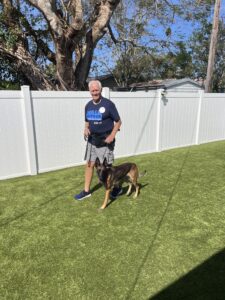
Veteran Walking With Service Dog
How Do Service Dogs Help Veterans with PTSD?
Service dogs assist veterans with PTSD by recognizing stress signals and providing immediate calming support.
Many veterans experience sudden anxiety, flashbacks, or hyper-awareness in crowded environments. A trained service dog learns to notice these cues and respond in ways that help interrupt the stress cycle.
For example, a service dog may:
• Apply deep pressure by leaning against their handler
• Guide the veteran away from crowded spaces
• Wake them during night terrors
• Create a protective buffer in public settings
According to K9s for Warriors research, veterans paired with service dogs report improved sleep, reduced anxiety, and greater emotional stability.
Why Sarasota Veteran Michael Needed a Service Dog
Michael proudly served maintaining F-18 fighter jets, working daily around the thunder of jet engines.
Over time, the constant noise caused severe hearing loss, and like many veterans, the emotional toll of service followed him home. After a difficult divorce, daily life became more isolating.
Then Bella entered the picture.
Bella had the heart, the loyalty, and the intelligence. What she needed was the specialized training required to become a certified service dog.
Image Suggestion: Photo of Mike and Bella training together outdoors.
Alt Text: “Veteran Michael training with service dog Bella in Sarasota.”
How Bella Is Becoming a Service Dog for Mike
Bella has now learned the skills that will allow her to support Michael every day.
With dedicated training, Bella has learned :
• Walk calmly beside Mike in public environments
• Provide balance assistance when needed
• Alert him to important sounds, changes in his health • Offer calming contact during moments of stress
Most importantly, Bella now goes everywhere with Mike and his family, helping restore confidence in daily life.
Watching them together is a powerful reminder that service dog partnerships are not just about commands. They are about rebuilding independence and restoring hope.
Why Service Dog Training Matters for Veterans
A loving pet can provide comfort, but professional service dog training transforms that bond into a life-saving partnership.
Service dog training focuses on:
• Public behavior and calm movement in crowds
• Response to medical or emotional cues
• Consistent obedience and safety skills
• Reliable assistance during stressful situations
According to Assistance Dogs International, service dogs undergo hundreds of hours of specialized training before certification.
This training ensures that both the dog and the veteran can safely navigate the world together.
How Canines for Heroes Supports Sarasota Veterans
At Canines for Heroes, our mission is simple but powerful:
Pair veterans and first responders with highly trained service dogs that help rebuild their lives.
We focus on real partnerships that support veterans long after their service has ended.
Our programs help veterans:
• Train service dogs for PTSD and hearing support
• Build long-term emotional resilience
• Restore independence and confidence
• Strengthen family connections through stability
Every success story, including Mike and Bella’s, reminds us why community support matters.
Every Sarasota Veteran Deserves a Wingman
Veterans like Michael have already served our country with courage and dedication.
Now it’s our turn to stand beside them.
When a service dog completes training, the partnership does far more than assist with daily tasks. It restores freedom, confidence, and connection with the world again.
And sometimes, that transformation begins with a single dog named Bella.
Support Service Dogs for Veterans in Sarasota
If you would like to help veterans like Michael, we invite you to support the mission of Canines for Heroes.
Your support helps provide training, certification, and care for service dogs that change lives.
📞 (941) 867-8325
📧 mark@caninesforheroes.org
Together we can help more Sarasota veterans rediscover independence and hope.
Frequently Asked Questions
How do service dogs help veterans with PTSD?
Service dogs are trained to recognize stress signals and provide calming support during anxiety or panic attacks. They may apply pressure therapy, guide veterans away from stressful environments, or wake them from night terrors.
Are service dogs different from emotional support animals?
Yes. Service dogs are specially trained to perform tasks that assist individuals with disabilities, while emotional support animals provide comfort but do not have specialized task training.
How long does it take to train a service dog?
Training can take anywhere from 6 months to 2 years, depending on the dog and the tasks required. Consistent training ensures reliability and safety.
Can veterans train their own service dogs?
Yes, in many cases veterans can train their own dogs with professional guidance and structured programs like those offered by Canines for Heroes.
How can I help support service dogs for veterans in Sarasota?
You can donate, volunteer, or help raise awareness about organizations like Canines for Heroes that provide life-changing service dog training for veterans.
Sources
U.S. Department of Veterans Affairs
https://www.va.gov
National Institutes of Health PTSD and Service Dog Research
https://www.nih.gov
Assistance Dogs International
https://assistancedogsinternational.org
K9s for Warriors Research
https://k9sforwarriors.org