
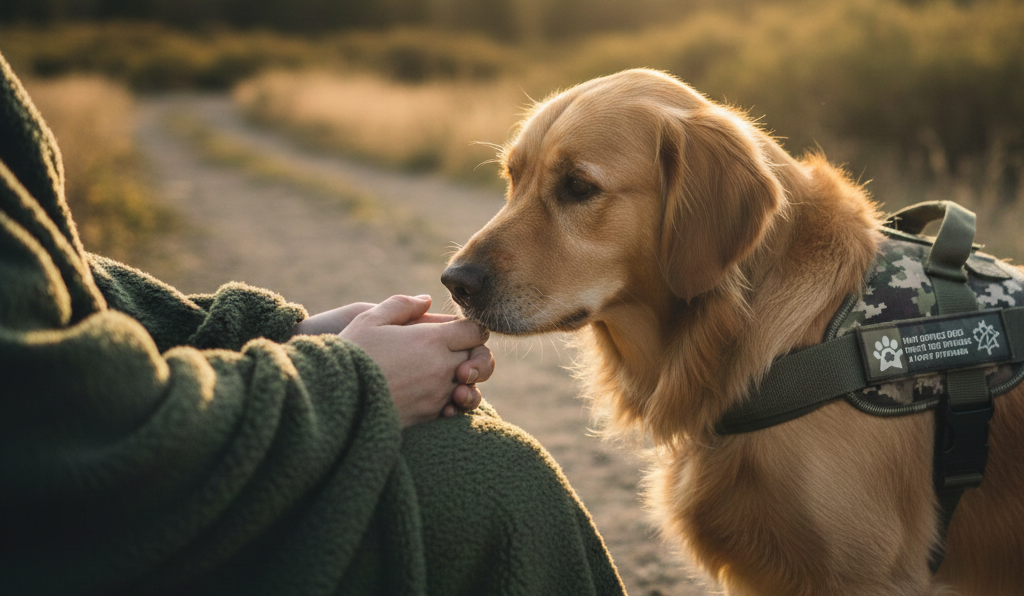
Service dogs for PTSD offer more than companionship they provide stability, safety, and a renewed sense of control for veterans and first responders living with trauma. PTSD can quietly reshape every aspect of daily life, affecting sleep, relationships, independence, and emotional well-being. For many heroes, the journey toward healing feels overwhelming and isolating.
At Canines for Heroes, we see firsthand how trained service dogs help veterans and first responders move forward after trauma. These dogs are not a temporary solution or emotional comfort alone. They are highly trained partners who respond in real time to PTSD symptoms, helping their handlers regain confidence and reconnect with life.
Recovery is not about forgetting the past. It is about learning how to live fully again and service dogs make that possible.
The Invisible Weight of PTSD
PTSD does not always appear immediately after trauma. For veterans and first responders, symptoms often build over time through repeated exposure to high-stress, life-threatening situations. What begins as heightened alertness can evolve into constant anxiety, panic attacks, emotional numbness, and exhaustion.
Common struggles include:
Difficulty sleeping or recurring nightmares
Hypervigilance in public spaces
Sudden panic or emotional shutdown
Avoidance of crowds or social situations
Feelings of isolation or disconnection
Loss of confidence and independence
Many heroes continue to push through these symptoms in silence, believing they should be able to “handle it.” Over time, that burden becomes heavier.
Why PTSD Affects Daily Life So Deeply
PTSD impacts the nervous system, not just thoughts or emotions. The brain remains stuck in survival mode, constantly scanning for threats. Even safe environments can feel overwhelming.
This constant state of alert makes it difficult to:
Relax
Focus
Trust others
Feel safe at home or in public
Maintain relationships
Traditional coping strategies may help in controlled settings, but PTSD often strikes without warning. This is where service dogs play a critical role.
How Service Dogs Support PTSD in Real Time
Service dogs are trained to recognize subtle changes in their handler’s body language, breathing, posture, and scent. These signals often appear before a panic attack, flashback, or dissociative episode becomes severe.
PTSD-related tasks service dogs may perform:
Interrupting panic attacks with physical contact
Providing deep pressure therapy
Grounding handlers during flashbacks
Waking handlers from nightmares
Creating space in crowded environments
Guiding handlers to exits when overwhelmed
These responses happen immediately without judgment, delay, or explanation.
Restoring a Sense of Safety
One of the greatest challenges PTSD creates is the loss of safety. Many veterans and first responders feel constantly on edge, even in familiar surroundings. Service dogs help restore that sense of security.
Handlers often describe:
Feeling safer leaving the house
Reduced fear in public spaces
Improved sleep quality
Less need to constantly scan their environment
Knowing a trained partner is alert allows the handler’s nervous system to relax.
Emotional Regulation Through Consistency
PTSD can make emotions feel unpredictable and overwhelming. Service dogs provide emotional stability by responding consistently and encouraging routine.
Daily interactions with a service dog help:
Regulate breathing and heart rate
Reduce emotional escalation
Create structure and responsibility
Encourage calm, predictable routines
Over time, these small moments of regulation lead to lasting emotional balance.
The Impact on Families and Relationships
PTSD affects not only the individual, but everyone around them. Family members may struggle to understand triggers, mood changes, or withdrawal.
Service dogs often help families by:
Reducing the intensity of PTSD episodes
Providing reassurance during difficult moments
Creating a calmer home environment
Offering peace of mind to spouses and children
When a hero feels supported, families heal together.
Rebuilding Independence and Confidence
Many veterans and first responders lose confidence in their ability to navigate everyday life after trauma. Service dogs help rebuild independence by offering reliable support.
With a service dog, handlers often:
Return to public spaces
Re-engage socially
Resume daily activities
Feel capable again
This renewed independence is a powerful step toward long-term healing.
The Role of Routine in PTSD Recovery
Routine is essential for recovery. Service dogs naturally create structure through feeding schedules, training reinforcement, exercise, and care.
Routine helps by:
Reducing uncertainty
Encouraging responsibility
Supporting healthy sleep patterns
Creating daily purpose
These routines help anchor recovery in everyday life.
Medical Alert Support and PTSD
Many individuals with PTSD also experience medical conditions such as anxiety-induced fainting, heart irregularities, or dissociation. Some service dogs are trained to provide medical alerts in addition to PTSD support.
Medical alert tasks may include:
Detecting changes before an episode
Alerting the handler to sit or seek help
Retrieving medication
Providing physical stability
This dual role enhances safety and confidence.
From Shelter Dog to Lifesaving Partner
At Canines for Heroes, many service dogs begin as rescue dogs. These dogs may have faced abandonment or uncertainty, yet they possess incredible potential.
Through training, they become:
Focused working partners
Trusted companions
Lifesaving support systems
This transformation is central to our mission.
One dog. Two lives changed.
Long-Term Benefits of Service Dog Partnerships
Service dogs are not a short-term solution. Their impact deepens over time as trust grows.
Long-term benefits often include:
Reduced PTSD symptom severity
Improved emotional regulation
Better sleep
Increased social engagement
Greater quality of life
Many handlers describe their service dog as the turning point in their recovery.
Why Canines for Heroes Is Different
Canines for Heroes focuses on long-term success, not quick placements. Each partnership is built through careful training, thoughtful matching, and ongoing support.
Our approach includes:
Rescue-based training
PTSD and medical alert specialization
Personalized handler matching
Continued support after placement
We believe healing is a journey, not a finish line.
How You Can Support This Mission
Training service dogs requires time, expertise, and resources. Community support makes this work possible.
You can help by:
Sponsoring a service dog
Making a tax-deductible donation
Supporting training programs
Sharing awareness
Every contribution helps another hero move toward healing.
FAQ: Service Dogs and PTSD Recovery
How do service dogs help with PTSD?
Service dogs interrupt panic attacks, provide grounding, wake handlers from nightmares, and offer constant emotional support.
Are service dogs a replacement for therapy?
No. Service dogs complement therapy and medical treatment by providing real-time support in daily life.
How long does it take to adjust to a service dog?
Many handlers notice positive changes within weeks, with continued improvement over time.
Do service dogs help families too?
Yes. Families often report reduced stress and improved emotional stability.
Can first responders apply for service dogs?
Yes. Eligible veterans and first responders may apply through Canines for Heroes.
What happens when a service dog retires?
Retired service dogs often remain with their handler as companions, and future support options are discussed as needs evolve.
PTSD recovery is not about erasing the past it’s about reclaiming life in the present. Service dogs provide veterans and first responders with safety, stability, and renewed hope. Through trained partnerships, healing becomes possible one step at a time.
At Canines for Heroes, we believe no hero should face recovery alone. With the right service dog by their side, life after trauma can be meaningful, connected, and full again.