
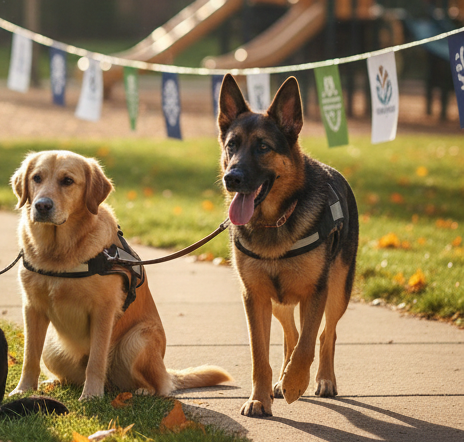
Nonprofit leadership responsibility is the foundation of ethical decision-making, transparency, and long-term mission success. At Canines for Heroes, nonprofit leadership responsibility ensures that veterans, first responders, service dogs, donors, and volunteers are treated with care, respect, and accountability.
This level of responsibility requires leadership that is grounded, transparent, and deeply committed to long-term impact. Decisions cannot be rushed. Shortcuts cannot be taken. Every choice must reflect the mission and protect the people and animals we serve.
Leading with purpose means honoring trust every single day.
Leadership as Stewardship, Not Control
At its core, leadership at Canines for Heroes is stewardship. Stewardship means caring for something that ultimately belongs to others. The mission does not belong to any one person. It belongs to the veterans, first responders, families, donors, volunteers, and dogs who make it possible.
Stewardship requires humility. Leaders must listen carefully, remain open to learning, and be willing to make difficult decisions when necessary. It also requires courage. Protecting the mission sometimes means saying no, slowing growth, or choosing quality over speed.
True leadership serves the mission first, even when that path is harder.
The Weight of Responsibility in Service Dog Organizations
Organizations that train and place service dogs carry a unique responsibility. This work involves living beings with emotional and physical needs. Dogs are not equipment. Veterans and first responders are not statistics.
Every placement decision has lasting consequences. A poorly trained dog can create stress rather than relief. A rushed match can harm trust. Inadequate follow-up can leave someone without support when they need it most.
Leadership must ensure that systems are in place to protect everyone involved. This means setting high standards, enforcing policies consistently, and never losing sight of why the work exists in the first place.
Strong nonprofit leadership responsibility protects the mission by prioritizing ethical standards, thoughtful decision-making, and long-term impact.
Mission-Driven Decision Making
Mission-driven leadership means asking the same question again and again. Does this decision serve the mission.
At Canines for Heroes, leadership decisions are guided by:
The safety and well-being of service dogs
The long-term success of veterans and first responders
Ethical use of donations and resources
Transparency with supporters and partners
Sustainability of programs over time
Growth is only meaningful if it strengthens these priorities. Expansion without infrastructure can weaken programs and erode trust. Leadership must be willing to grow at a pace that protects quality and integrity.
Accountability Builds Trust
Trust is the foundation of any nonprofit organization. Donors trust that their contributions will be used responsibly. Applicants trust that promises will be honored. Volunteers trust that their time matters. Dogs trust the humans who care for them.
Accountability ensures that trust is never taken for granted.
At Canines for Heroes, accountability shows up through:
Clear financial oversight
Defined program standards
Ongoing evaluation of outcomes
Honest communication with stakeholders
Willingness to address challenges openly
Leadership is not about appearing perfect. It is about being accountable when things are difficult.
Nonprofit leadership responsibility also ensures that service dogs and heroes receive consistent support without shortcuts or compromised care.
Transparency as a Leadership Value
Transparency is not optional in nonprofit leadership. It is a responsibility. Supporters deserve to understand how decisions are made and how resources are used.
Transparent leadership includes:
Clear explanation of programs and processes
Honest reporting on successes and limitations
Open communication during change or growth
Accessibility to questions and concerns
Transparency builds credibility. It allows communities to stand behind the mission with confidence.
Protecting the Dogs Through Ethical Leadership
Service dogs are at the heart of the mission. Ethical leadership means placing animal welfare above optics, timelines, or pressure to produce results quickly.
Leadership must ensure that:
Dogs are selected carefully
Training methods are humane and evidence-based
Dogs are not placed beyond their capacity
Retirement decisions are made with compassion
A dog that is not suited for service work still deserves safety, dignity, and a future. Ethical leadership protects dogs from being treated as tools rather than partners.
Supporting Veterans and First Responders With Integrity
Veterans and first responders often arrive at Canines for Heroes after years of carrying invisible burdens. Leadership must honor that reality with patience and respect.
This means:
Setting realistic expectations
Avoiding promises that cannot be kept
Providing honest timelines
Offering support beyond placement
Leadership must recognize that healing is not linear. Success is measured in stability, safety, and improved quality of life, not speed.
Long-Term Thinking in a Short-Term World
Many nonprofits feel pressure to produce quick results. Grants, media attention, and public expectations often reward short-term outcomes. But leadership focused on longevity understands that real impact takes time.
At Canines for Heroes, long-term thinking means:
Investing in training quality
Building strong internal systems
Developing leadership capacity
Maintaining consistent standards
Planning for future sustainability
This approach may not always be flashy, but it protects the mission for years to come.
Leadership and Organizational Culture
Culture begins at the top. Leadership sets the tone for how people are treated, how problems are addressed, and how success is defined.
Healthy organizational culture includes:
Respectful communication
Clear boundaries and expectations
Support during challenges
Recognition of effort and impact
When leadership models these values, they become part of everyday operations.
Navigating Growth Without Losing Identity
Growth can be both exciting and dangerous. Leadership must guide expansion carefully to avoid mission drift.
Questions leaders must continually ask include:
Do we have the capacity to grow responsibly
Will growth improve outcomes or strain systems
Are we maintaining the same level of care
Does expansion align with our core values
Growth should deepen impact, not dilute it.
Learning and Adapting as a Leader
Strong leaders remain students. They listen to feedback, stay informed, and adapt as circumstances change.
Leadership growth includes:
Learning from program outcomes
Listening to participant experiences
Staying informed on best practices
Seeking guidance when needed
Adaptability allows organizations to evolve without losing direction.
The Role of Community in Leadership Success
Leadership does not exist in isolation. Community support strengthens leadership by providing perspective, accountability, and resources.
Supporters play a vital role by:
Asking thoughtful questions
Offering feedback
Contributing time or resources
Advocating for the mission
Leadership thrives when it remains connected to the community it serves.
Why Leadership Matters to Donors and Supporters
Donors are not just funding programs. They are investing in leadership decisions. Responsible leadership ensures that donations create real, lasting impact.
When leadership is strong:
Resources are used efficiently
Programs remain consistent
Trust grows over time
Impact becomes sustainable
Supporting leadership means supporting the future of the mission.
Commitment Beyond the Present Moment
Leadership at Canines for Heroes is about more than current programs. It is about the future of every veteran, first responder, and service dog who will come through the organization’s doors.
This commitment requires:
Long-term vision
Ethical discipline
Emotional intelligence
Courage to protect standards
Leadership is not measured by visibility, but by the stability it creates.
How Supporters Strengthen Responsible Leadership
Community support allows leadership to focus on mission rather than survival. Donations, partnerships, and advocacy make it possible to invest in systems that protect quality and care.
Supporters can help by:
Making a tax-deductible donation
Sponsoring a service dog
Supporting operational needs
Sharing the mission
Every contribution strengthens responsible leadership and long-term impact.
When nonprofit leadership responsibility guides every decision, trust grows and meaningful impact becomes sustainable.
Conclusion
Leadership at Canines for Heroes is rooted in responsibility, stewardship, and trust. It is shaped by the understanding that lives are affected by every decision made.
Leading with purpose means honoring the mission even when it requires patience, restraint, and difficult choices. It means protecting dogs, supporting heroes, and respecting the trust of the community.
At Canines for Heroes, leadership is not about being seen. It is about ensuring that healing, safety, and dignity remain at the center of everything we do, today and for years to come.