
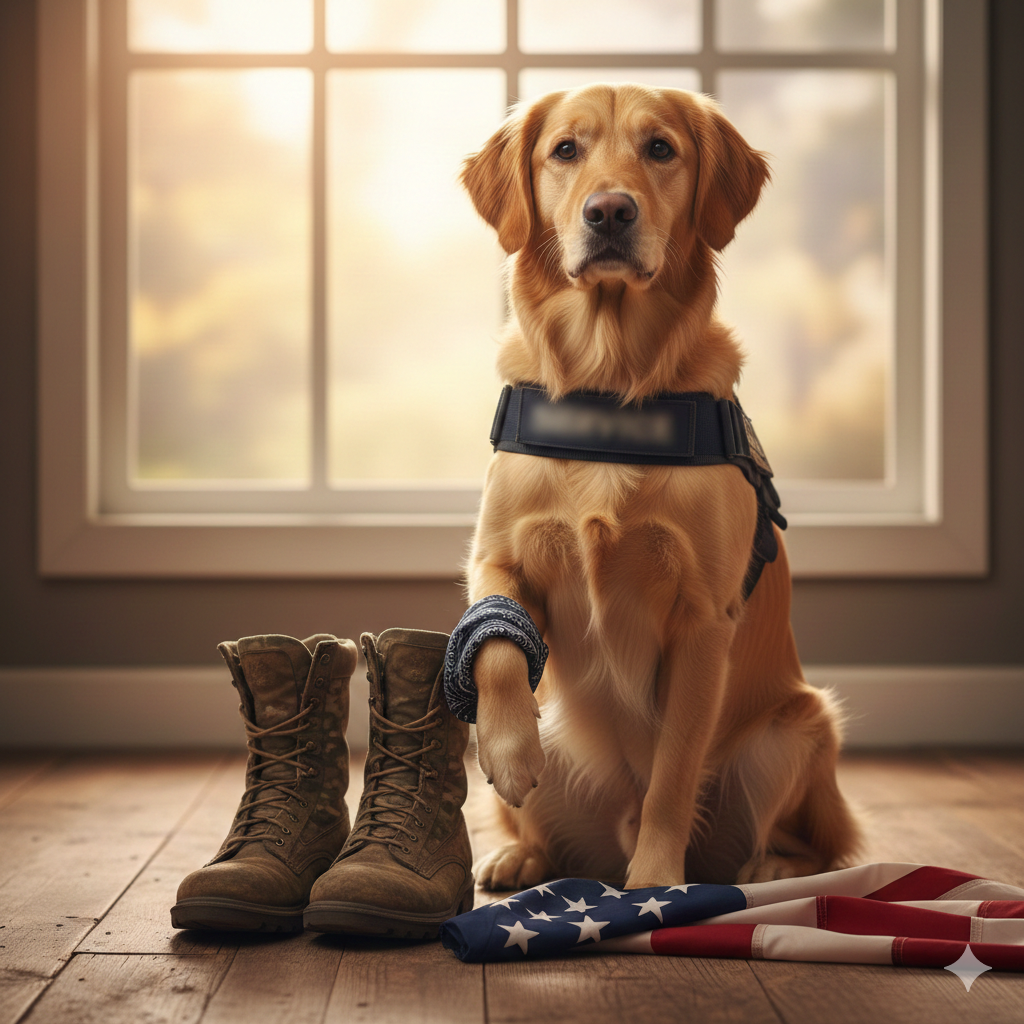
Service dogs for trauma provide life-changing support for veterans and first responders coping with the long-term effects of traumatic experiences. PTSD service dogs provide life changing support for veterans and first responders who are living with the lasting effects of trauma. Post traumatic stress disorder can impact every part of daily life, including sleep, emotional regulation, relationships, and independence. For many heroes, the struggle continues long after their service has ended.
Veterans and first responders are often exposed to repeated traumatic events over long periods of time. These experiences can leave the nervous system in a constant state of alert, making it difficult to feel safe even in familiar environments. While therapy and medication can be helpful, many individuals still struggle with symptoms that appear suddenly and without warning. Service dogs for trauma offer grounding, emotional regulation, and reliable daily support that helps reduce the impact of trauma-related symptoms.
At Canines for Heroes, PTSD service dogs are trained to provide consistent, reliable support that helps restore stability, confidence, and a sense of safety. These dogs work alongside their handlers every day, offering assistance that goes beyond emotional comfort. They are trained partners who help heroes regain control of their lives.
Understanding PTSD in Veterans and First Responders
Post traumatic stress disorder develops when the brain and body remain stuck in survival mode after experiencing trauma. For veterans and first responders, trauma is often cumulative rather than a single event. Years of responding to emergencies, violence, injuries, or loss can overwhelm the nervous system.
Common PTSD symptoms include:
Hypervigilance and constant alertness
Panic attacks or sudden anxiety
Nightmares and disrupted sleep
Emotional numbness or withdrawal
Irritability or anger
Difficulty concentrating
Avoidance of crowds or public spaces
These symptoms can interfere with work, family life, and personal well being. Many heroes continue to function outwardly while struggling internally, often delaying help because they believe they should be able to handle it on their own.
Why PTSD Can Be So Disruptive to Daily Life
PTSD affects how the brain processes safety and threat. Even when danger is no longer present, the body may react as if it is. This can make everyday situations feel overwhelming or unsafe.
Simple activities such as grocery shopping, attending family gatherings, or sleeping through the night can become challenging. Over time, individuals may withdraw from social situations, limit their independence, or feel disconnected from loved ones.
Because PTSD reactions are often automatic, coping strategies learned in therapy may be difficult to apply in real time. This is where PTSD service dogs offer unique and powerful support.
What PTSD Service Dogs Are Trained to Do
PTSD service dogs are trained to recognize subtle changes in their handler’s behavior, body language, breathing, and scent. These changes often occur before a panic attack, flashback, or emotional shutdown becomes intense.
Common PTSD related tasks include:
Interrupting panic attacks through physical contact
Providing grounding by nudging or leaning
Applying calming pressure during anxiety episodes
Waking handlers from nightmares
Creating physical space in crowded environments
Guiding handlers to exits when overwhelmed
These tasks help regulate the nervous system and prevent symptoms from escalating. The dog responds immediately and without judgment.
Restoring a Sense of Safety
One of the greatest losses caused by PTSD is the feeling of safety. Many veterans and first responders feel constantly on edge, even at home. PTSD service dogs help restore that sense of security by remaining alert and responsive, allowing the handler to relax.
Handlers often report:
Feeling safer in public spaces
Reduced fear when leaving home
Improved sleep quality
Less need to constantly scan their surroundings
Knowing a trusted partner is present allows the brain to exit survival mode more often.
Emotional Regulation Through Consistent Support
PTSD can cause intense emotional swings that feel unpredictable and exhausting. PTSD service dogs provide emotional stability by responding consistently and encouraging routine.
Daily interactions with a service dog help:
Regulate breathing and heart rate
Reduce emotional escalation
Create structure and predictability
Encourage calm responses to stress
Over time, this consistency builds emotional resilience and confidence.
The Role of Routine in PTSD Recovery
Routine plays a critical role in recovery. PTSD service dogs naturally create structure through daily care, training reinforcement, exercise, and bonding.
Routine helps by:
Reducing uncertainty
Encouraging responsibility and purpose
Supporting healthy sleep patterns
Creating daily motivation
These small, repeated actions help ground recovery in everyday life.
How PTSD Service Dogs Support Families
PTSD does not only affect the individual. Families often feel the impact through mood changes, emotional withdrawal, or sudden anxiety episodes. PTSD service dogs can ease family stress by reducing symptom intensity and providing reassurance.
Families often experience:
Fewer emotional outbursts
Improved communication
Reduced household tension
Greater peace of mind
When a loved one feels supported and safe, the entire family benefits.
Medical and Emotional Support Combined
Some veterans and first responders with PTSD also experience medical conditions such as anxiety related fainting, heart irregularities, or dissociation. Certain PTSD service dogs are trained to provide both emotional and medical alert support.
Medical alert tasks may include:
Detecting changes before an episode
Alerting the handler to sit or seek help
Retrieving medication
Providing physical stability
This combined support increases safety and independence.
From Rescue Dog to Trusted Partner
At Canines for Heroes, many PTSD service dogs begin their journey as rescue dogs. These dogs may have been overlooked or abandoned, yet they possess incredible potential.
Through training and care, they become:
Focused working partners
Trusted companions
Lifesaving support systems
This transformation reflects the heart of the mission.
One dog. Two lives changed.
Long Term Benefits of PTSD Service Dogs
PTSD service dogs are not a temporary solution. Their impact often deepens over time as trust grows and skills strengthen.
Long term benefits may include:
Reduced severity of PTSD symptoms
Improved emotional regulation
Better sleep quality
Increased social engagement
Greater independence
Many handlers describe their service dog as the turning point in their recovery.
Why Canines for Heroes Is Different
Canines for Heroes focuses on long term success rather than quick placements. Each partnership is built through professional training, careful matching, and continued support.
The program emphasizes:
Rescue based service dog training
Personalized handler matching
PTSD and medical alert specialization
Ongoing support after placement
Healing is viewed as a journey, not a finish line.
How You Can Support PTSD Service Dogs
Training and placing PTSD service dogs requires time, expertise, and resources. Community support makes this mission possible.
You can help by:
Sponsoring a service dog
Making a tax deductible donation
Supporting training programs
Sharing awareness
Every contribution helps another hero move toward healing.
Service dogs for trauma provide steady, reliable support that helps veterans and first responders regain confidence and emotional balance.
FAQ:
How do PTSD service dogs help veterans and first responders
PTSD service dogs provide grounding, interrupt panic attacks, wake handlers from nightmares, and offer consistent emotional support during triggering situations.
Are PTSD service dogs a replacement for therapy
No. PTSD service dogs complement therapy and medical treatment by providing real time support in daily life.
How long does it take to adjust to a PTSD service dog
Many handlers notice positive changes within weeks, with continued improvement over time as the bond strengthens.
Do PTSD service dogs help families
Yes. Families often report reduced stress, improved communication, and greater peace of mind.
Can first responders apply for PTSD service dogs
Yes. Eligible veterans and first responders may apply through Canines for Heroes to be considered for a trained PTSD service dog.
Through consistent training and partnership, service dogs for trauma help restore independence and confidence over time.
What happens when a PTSD service dog retires
Retired service dogs often remain with their handler as companions, and future support options are discussed as needs evolve.
PTSD recovery is not about erasing the past. It is about reclaiming the present and building a future filled with stability, confidence, and purpose. PTSD service dogs provide veterans and first responders with consistent support that helps make healing possible.
At Canines for Heroes, no hero walks this journey alone. With a trained PTSD service dog by their side, recovery becomes a shared path toward hope, trust, and renewed life.
Learn more about our mission and how we support healing on our About Canines for Heroes page.