
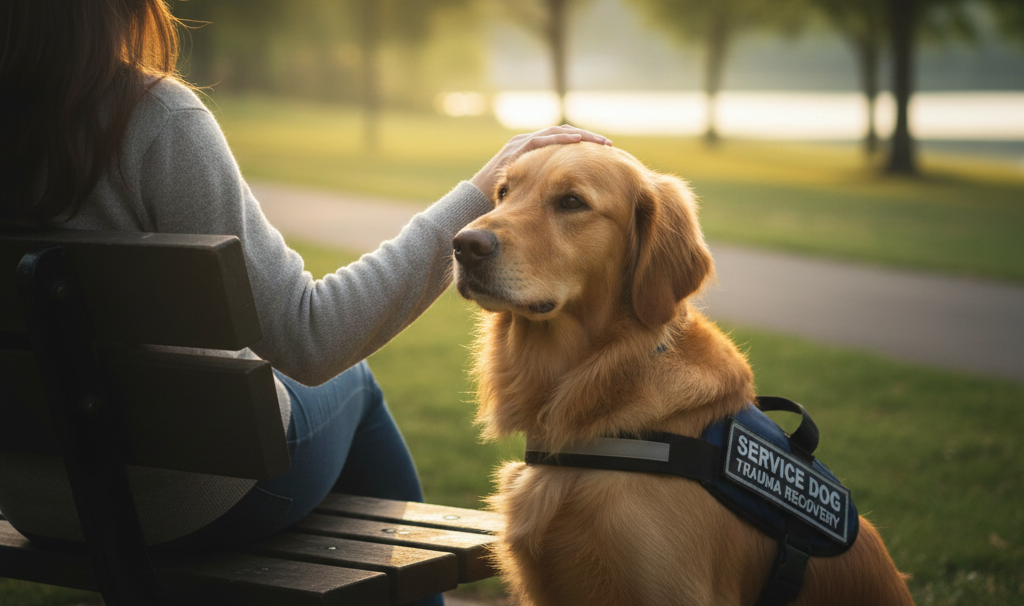
Service dogs for anxiety support are becoming an essential tool for veterans and first responders who struggle with stress, trauma, and overwhelming emotional responses. Anxiety can affect nearly every part of life, including sleep, relationships, work, and daily routines. However, trained service dogs provide consistent assistance that helps individuals manage these challenges and regain control.
Unlike emotional support animals, service dogs for anxiety support are trained to recognize early signs of distress and respond with specific tasks. These dogs provide grounding, reassurance, and stability when anxiety begins to escalate.
At Canines for Heroes, these partnerships are developed carefully so that each veteran or first responder receives a trained companion capable of supporting their long-term recovery.
Why Service Dogs for Anxiety Support Help Veterans and First Responders
Veterans and first responders often face intense situations throughout their careers. Exposure to emergencies, trauma, and life threatening experiences can place tremendous strain on emotional well-being.
Over time, this can lead to symptoms such as:
panic attacks
hypervigilance
sleep disruption
difficulty concentrating
emotional withdrawal
According to the National Institute of Mental Health, anxiety disorders are among the most common mental health challenges affecting adults today.
Service dogs for anxiety support provide immediate assistance during stressful moments, which can help reduce the intensity of these symptoms.
How Service Dogs for Anxiety Support Reduce Panic Episodes
Service dogs are trained to detect subtle changes in their handler’s behavior or physical state. Small cues such as breathing patterns, pacing, or muscle tension often signal that anxiety is increasing.
When these signals appear, the dog may perform trained behaviors such as:
nudging or pawing the handler to interrupt anxiety
applying grounding pressure by leaning against the handler
guiding the handler away from stressful environments
maintaining calming physical contact
These responses help regulate the nervous system and redirect attention away from escalating anxiety.
Because the dog remains calm and focused, the handler often feels safer and more in control.
Training Process for Service Dogs for Anxiety Support
Training service dogs for anxiety support requires patience, expertise, and careful evaluation. Not every dog has the temperament needed for this role.
Programs like Canines for Heroes evaluate dogs for qualities such as:
calm temperament
strong focus on humans
confidence in unfamiliar environments
ability to remain attentive during distractions
Once selected, dogs undergo extensive training that prepares them for real-world situations.
You can learn more about this mission by visiting the About Canines for Heroes page on the website.
Daily Benefits of Service Dogs for Anxiety Support
The presence of a trained service dog can transform daily life for many veterans and first responders.
Handlers often report improvements such as:
increased confidence leaving home
reduced panic episodes
improved sleep quality
greater comfort in public environments
stronger emotional stability
In addition, caring for a service dog creates routine and responsibility. Feeding schedules, walks, and training sessions establish structure that can help stabilize emotional health.
Over time, this consistent support can help individuals rebuild independence and reconnect with their communities.
Why Community Support Matters for Service Dog Programs
Training service dogs requires significant time and resources. Veterinary care, professional training, equipment, and ongoing support all contribute to the cost of each partnership.
Community support allows organizations to continue placing trained service dogs with those who need them most.
You can support this mission in several ways:
sponsoring a service dog
making a tax deductible donation
sharing awareness about service dog programs
If you would like to help a veteran or first responder receive a trained service dog, visit the Canines for Heroes donation page to learn how you can make a difference.
Additional Support for Veterans and First Responders
Service dogs work best when combined with professional care and support systems. Many veterans also benefit from counseling, peer support, and medical guidance.
Resources such as the U.S. Department of Veterans Affairs provide valuable information about PTSD and anxiety treatment options.
Together, these support systems help individuals create a stronger foundation for long term healing.
Frequently Asked Questions
What tasks do service dogs for anxiety support perform
They interrupt anxiety episodes, provide grounding pressure, guide handlers away from stressful environments, and offer reassurance during distress.
Are service dogs the same as emotional support animals
No. Service dogs are trained to perform specific tasks related to a disability, while emotional support animals provide comfort but do not perform trained tasks.
How long does service dog training take
Training typically takes between 12 and 24 months depending on the dog and the tasks required.
Can service dogs accompany their handlers in public
Yes. Under disability laws, trained service dogs are allowed in most public places including stores and restaurants.
How can veterans apply for a service dog
Veterans and first responders can learn about eligibility and the application process by visiting the How It Works page on the Canines for Heroes website.
A Partnership That Restores Confidence
Service dogs for anxiety support provide far more than companionship. They offer stability, emotional grounding, and daily assistance that helps veterans and first responders navigate life with greater confidence.
Through careful training and compassionate programs, these dogs become trusted partners in recovery.
At Canines for Heroes, every service dog partnership represents hope, resilience, and the belief that no hero should face recovery alone.