
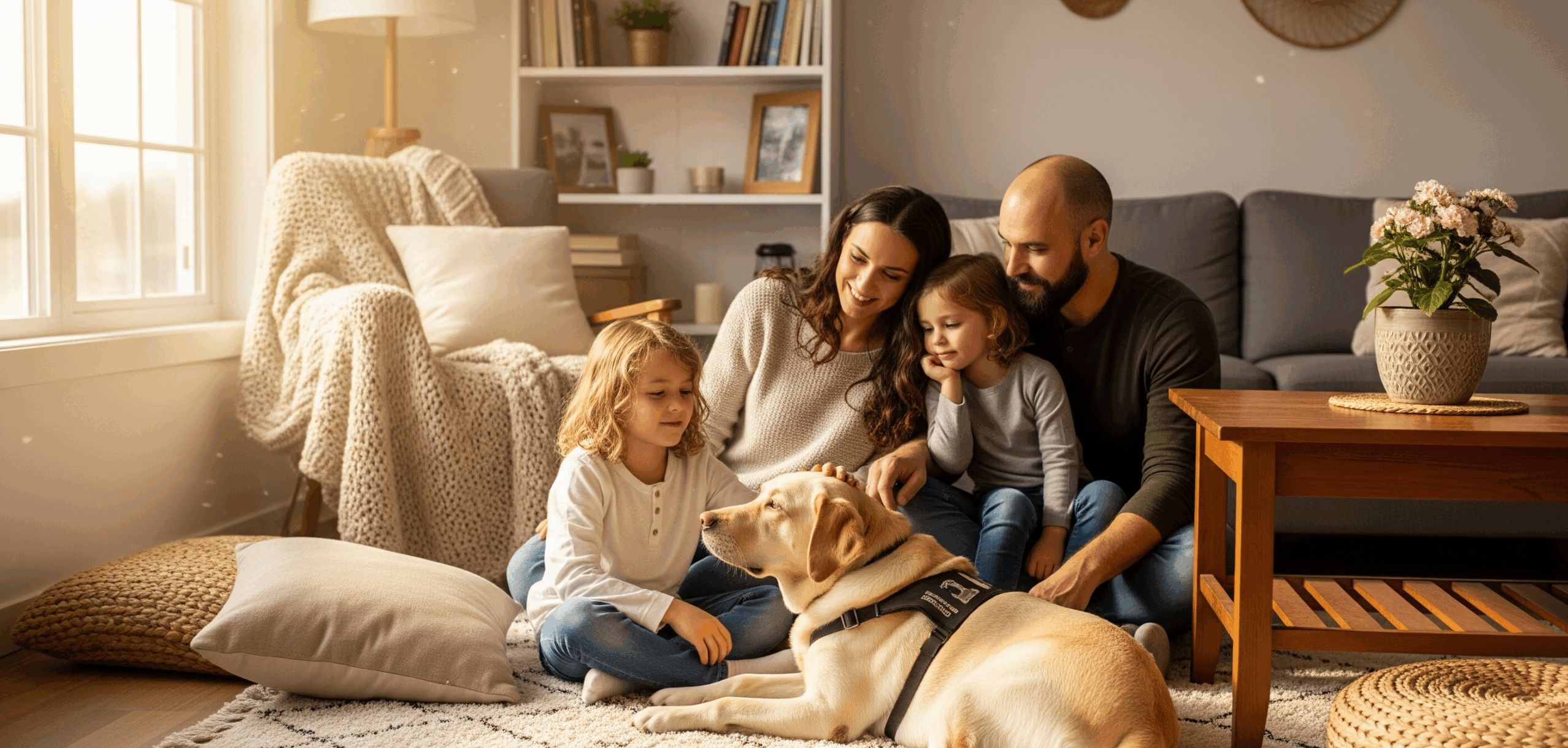
Service dogs for families of veterans and first responders play a powerful role in healing not just the individual who served, but the entire household. Trauma, PTSD, anxiety, and medical conditions affect more than one person—they ripple through families, caregivers, and loved ones every day.
At Canines for Heroes, we understand that when a veteran or first responder struggles, their family feels it too. Trained service dogs help restore balance, emotional stability, and peace of mind, creating healthier homes and stronger relationships.
How Trauma Impacts Families
Families of veterans and first responders often live with constant uncertainty. Loved ones may witness:
Mood changes and emotional withdrawal
Sleep disturbances and nightmares
Hypervigilance or irritability
Medical emergencies or anxiety episodes
Increased stress within the household
Caregivers and family members frequently put their own needs aside while supporting someone they love, which can lead to burnout and emotional exhaustion.
How Service Dogs Support Families
Service dogs provide consistent, reliable support that benefits the entire family system—not just the handler.
Ways Service Dogs Help at Home:
Interrupting anxiety or PTSD episodes before they escalate
Providing medical alerts that reduce emergency stress
Encouraging routines and daily structure
Creating a calming presence in the household
Offering emotional comfort to spouses and children
When a service dog is present, families often report improved communication, reduced tension, and a greater sense of safety.
Emotional Stability for Children
Children in households affected by trauma can struggle to understand what their parent or loved one is experiencing. Service dogs often become a comforting and stabilizing presence for children.
Benefits for children include:
Reduced fear during PTSD or medical episodes
Improved emotional regulation
A sense of security and companionship
Positive engagement and responsibility
For many children, the service dog becomes a bridge to understanding, comfort, and trust.
Supporting Caregivers and Spouses
Caregivers and spouses often carry the invisible weight of responsibility—monitoring symptoms, responding to emergencies, and providing emotional support.
Service dogs help caregivers by:
Reducing constant vigilance
Offering early alerts for medical or emotional distress
Allowing caregivers to rest and recharge
Providing reassurance when they cannot be present
This shared responsibility can significantly reduce caregiver burnout.
Medical and PTSD Support at Home
Service dogs trained for PTSD and medical alert work bring stability into daily life. Whether it’s waking a veteran from a nightmare, detecting a medical episode, or grounding a handler during anxiety, these dogs help prevent crises that affect the whole family.
Over time, families often experience:
Fewer emergency disruptions
Improved sleep for everyone
More predictable daily routines
Greater emotional safety
Training Service Dogs at Canines for Heroes
At Canines for Heroes, service dogs are trained with the entire family in mind. Each dog is carefully matched to the handler’s needs, lifestyle, and household environment.
Our Training Focus Includes:
PTSD and anxiety response
Medical alert support when needed
Public access and in-home behavior
Calm interaction with children and family members
Ongoing support after placement
We believe successful partnerships extend beyond the individual to the family unit.
Rescuing Dogs, Strengthening Families
Many of the dogs trained through Canines for Heroes are rescued from shelters. These dogs gain purpose, training, and a forever home—while families gain a devoted, stabilizing companion.
This dual-impact mission creates transformation on both ends of the leash.
One dog. Two lives changed. Entire families healed.
Long-Term Benefits for the Whole Household
The presence of a trained service dog often leads to long-term improvements, including:
Increased independence for the handler
Reduced stress for family members
Improved family relationships
Greater confidence in daily life
Families report that life becomes more manageable, predictable, and hopeful.
How Families Can Get Involved
Families can support this mission in several ways:
Encouraging loved ones to apply for a service dog
Sponsoring a service dog in training
Making tax-deductible donations
Sharing awareness about service dog programs
Every act of support helps bring healing into another home.
You can also sponsor a service dog and directly support a family in need.
Why Canines for Heroes Is Different
Canines for Heroes is committed to long-term success, not quick placements. We focus on personalized matching, professional training, and ongoing support—because families deserve lasting solutions.
Our mission honors not just the hero, but everyone who stands beside them.
The Role of Service Dogs in Daily Family Routines
Service dogs naturally integrate into daily family life, helping restore routines that may have been disrupted by trauma or medical challenges. Simple activities—such as morning schedules, school drop-offs, errands, and family outings—often become less stressful when a trained service dog is present.
Service dogs encourage consistency by:
Helping handlers wake up and start the day calmly
Providing grounding support during transitions
Reducing anxiety around leaving the home
Supporting structured routines that benefit children
Families often report that life feels more predictable and manageable, allowing them to focus on connection instead of constant crisis management.
Building Emotional Trust and Safety at Home
Trauma can impact trust within families, especially when loved ones struggle to communicate their needs. Service dogs help bridge emotional gaps by offering a calming, nonjudgmental presence that everyone can rely on.
For families, this often means:
Fewer emotional escalations
Faster recovery after stressful moments
Improved communication between family members
A shared sense of responsibility and care
Over time, the service dog becomes a stabilizing anchor within the home, helping family members feel safe and supported together.
Teaching Responsibility and Empathy Through Service Dogs
For families with children, service dogs often create opportunities for learning and growth. Children may assist with feeding schedules, grooming routines, or supervised play, fostering empathy and responsibility in age-appropriate ways.
These interactions can:
Teach respect for boundaries and working animals
Encourage compassion and patience
Help children feel involved in the healing process
Create positive bonding experiences
Service dogs often become trusted companions for children, offering comfort while reinforcing structure and responsibility.
A Lifelong Commitment to Families
At Canines for Heroes, placement is only the beginning. We understand that families evolve, and needs may change over time. That’s why we remain committed to ongoing support for every service dog partnership.
Our long-term support includes:
Continued training guidance
Behavioral support when needed
Resources for families and caregivers
A lifelong commitment to both dog and handler
This approach ensures that families never feel alone after placement and that partnerships remain successful for years to come.
FAQ: Service Dogs and Families
Do service dogs help the whole family or just the handler?
Service dogs primarily support the handler, but their presence often benefits the entire family by reducing stress, improving emotional stability, and creating a safer home environment.
Can children interact with a service dog at home?
Yes. While service dogs are working animals, they are trained to behave calmly around children and can form healthy, supportive bonds within the household.
Do service dogs help caregivers feel less overwhelmed?
Absolutely. Service dogs reduce the need for constant monitoring by providing alerts and early intervention, allowing caregivers to rest and regain balance.
Are service dogs trained to work inside the home?
Yes. Service dogs are trained for both public access and in-home support, including nighttime assistance, emotional grounding, and medical alerts.
Can families apply for a service dog through Canines for Heroes?
- Veterans, first responders, and families supporting them can apply through Canines for Heroes to be considered for a trained service dog.
Learn more about our mission and how we serve heroes on our About Canines for Heroes page.