
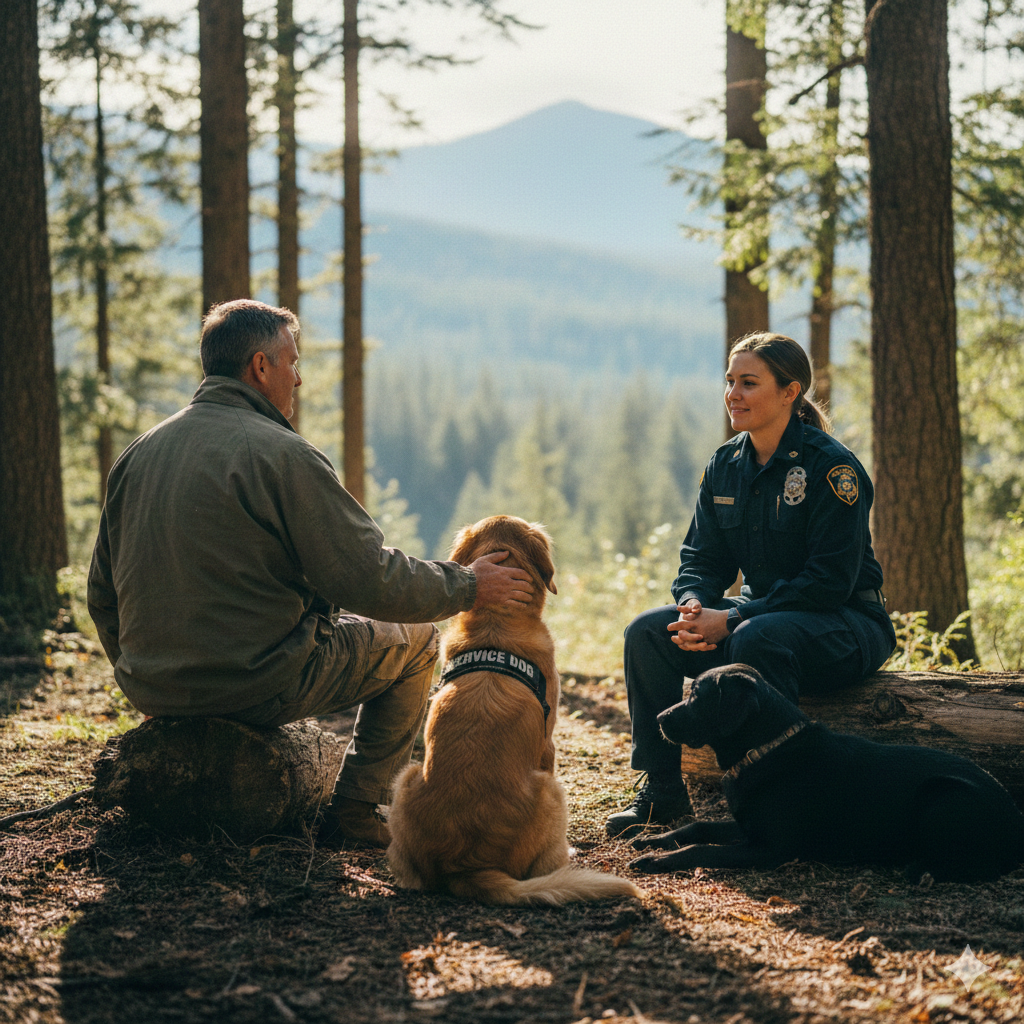
Service dogs for PTSD recovery provide life-changing support for veterans and first responders affected by trauma. Through trained canine partnerships, these dogs help individuals manage symptoms, regain emotional balance, and feel safer navigating everyday life.
Post-traumatic stress disorder does not always appear immediately after a traumatic event. For many heroes, symptoms develop over time after repeated exposure to emergencies, loss, and high-stress environments. Without consistent support, PTSD can impact relationships, independence, and overall quality of life.
At Canines for Heroes, service dog partnerships are built to support long-term PTSD recovery through trust, structure, and emotional grounding.
Understanding PTSD in Veterans and First Responders
PTSD affects individuals differently, but common symptoms often include:
Hypervigilance and constant alertness
Anxiety or panic attacks
Nightmares and disrupted sleep
Emotional numbness or withdrawal
Difficulty concentrating
Avoidance of public spaces
According to the U.S. Department of Veterans Affairs, PTSD can significantly affect daily functioning when left untreated.
👉 https://www.ptsd.va.gov
For veterans and first responders, these symptoms can feel isolating and difficult to explain, especially when the trauma was cumulative rather than a single event.
Why Service Dogs for PTSD Recovery Are So Effective
Service dogs for PTSD recovery are trained to recognize subtle emotional and physical changes before symptoms escalate. These dogs respond in real time, offering grounding and reassurance when it matters most.
Trained tasks may include:
Interrupting anxiety or panic episodes
Providing grounding through physical contact
Waking handlers from nightmares
Creating space in crowded environments
Remaining alert so handlers can relax
This consistent support helps regulate the nervous system and reduce emotional overload.
Restoring Emotional Safety Through Service Dog Partnerships
One of the most challenging aspects of PTSD is the loss of safety. Many individuals feel constantly on edge, even in familiar places.
Service dogs help restore safety by:
Remaining calm and attentive
Alerting handlers to environmental changes
Providing reassurance through presence
Reducing the need for constant vigilance
Handlers often report improved sleep, increased comfort in public spaces, and greater confidence over time.
The Role of Routine in PTSD Recovery
Routine plays a vital role in emotional healing. Service dogs naturally create structure through daily care, exercise, and reinforcement of training.
Routine supports recovery by:
Reducing uncertainty
Encouraging responsibility and purpose
Promoting healthy sleep patterns
Creating predictable daily interactions
Over time, these routines help rebuild emotional resilience.
Rebuilding Independence With Service Dogs for PTSD Recovery
PTSD can limit independence by making everyday tasks feel overwhelming. Service dogs help restore independence by providing reliable support in real-world situations.
With a service dog, many handlers regain the ability to:
Attend appointments
Shop for necessities
Travel or socialize
Return to work or volunteering
Participate fully in family life
This renewed independence often marks a turning point in recovery.
Supporting Families Affected by PTSD
PTSD affects families as well as individuals. Loved ones may struggle to understand emotional changes or anxiety episodes.
Service dogs often support families by:
Reducing emotional volatility
Creating a calmer home environment
Providing peace of mind
Improving communication
When a hero feels supported, the entire family benefits.
From Rescue Dog to PTSD Recovery Partner
Many service dogs trained through Canines for Heroes come from shelters. These dogs are carefully evaluated for temperament, focus, and resilience.
Through professional training, they become:
Emotionally attuned partners
Focused working dogs
Lifesaving support systems
This transformation changes two lives at once.
One dog. Two lives changed.
Service dogs for PTSD recovery provide life-changing support for veterans and first responders affected by trauma. Through trained canine partnerships, these dogs help individuals manage symptoms, regain emotional balance, and feel safer navigating everyday life.
Post-traumatic stress disorder does not always appear immediately after a traumatic event. For many heroes, symptoms develop over time after repeated exposure to emergencies, loss, and high-stress environments. Without consistent support, PTSD can impact relationships, independence, and overall quality of life.
At Canines for Heroes, service dog partnerships are built to support long-term PTSD recovery through trust, structure, and emotional grounding.
Understanding PTSD in Veterans and First Responders
PTSD affects individuals differently, but common symptoms often include:
Hypervigilance and constant alertness
Anxiety or panic attacks
Nightmares and disrupted sleep
Emotional numbness or withdrawal
Difficulty concentrating
Avoidance of public spaces
According to the U.S. Department of Veterans Affairs, PTSD can significantly affect daily functioning when left untreated.
👉 https://www.ptsd.va.gov
For veterans and first responders, these symptoms can feel isolating and difficult to explain, especially when the trauma was cumulative rather than a single event.
Why Service Dogs for PTSD Recovery Are So Effective
Service dogs for PTSD recovery are trained to recognize subtle emotional and physical changes before symptoms escalate. These dogs respond in real time, offering grounding and reassurance when it matters most.
Trained tasks may include:
Interrupting anxiety or panic episodes
Providing grounding through physical contact
Waking handlers from nightmares
Creating space in crowded environments
Remaining alert so handlers can relax
This consistent support helps regulate the nervous system and reduce emotional overload.
Restoring Emotional Safety Through Service Dog Partnerships
One of the most challenging aspects of PTSD is the loss of safety. Many individuals feel constantly on edge, even in familiar places.
Service dogs help restore safety by:
Remaining calm and attentive
Alerting handlers to environmental changes
Providing reassurance through presence
Reducing the need for constant vigilance
Handlers often report improved sleep, increased comfort in public spaces, and greater confidence over time.
The Role of Routine in PTSD Recovery
Routine plays a vital role in emotional healing. Service dogs naturally create structure through daily care, exercise, and reinforcement of training.
Routine supports recovery by:
Reducing uncertainty
Encouraging responsibility and purpose
Promoting healthy sleep patterns
Creating predictable daily interactions
Over time, these routines help rebuild emotional resilience.
Rebuilding Independence With Service Dogs for PTSD Recovery
PTSD can limit independence by making everyday tasks feel overwhelming. Service dogs help restore independence by providing reliable support in real-world situations.
With a service dog, many handlers regain the ability to:
Attend appointments
Shop for necessities
Travel or socialize
Return to work or volunteering
Participate fully in family life
This renewed independence often marks a turning point in recovery.
Supporting Families Affected by PTSD
PTSD affects families as well as individuals. Loved ones may struggle to understand emotional changes or anxiety episodes.
Service dogs often support families by:
Reducing emotional volatility
Creating a calmer home environment
Providing peace of mind
Improving communication
When a hero feels supported, the entire family benefits.
From Rescue Dog to PTSD Recovery Partner
Many service dogs trained through Canines for Heroes come from shelters. These dogs are carefully evaluated for temperament, focus, and resilience.
Through professional training, they become:
Emotionally attuned partners
Focused working dogs
Lifesaving support systems
This transformation changes two lives at once.
One dog. Two lives changed.