
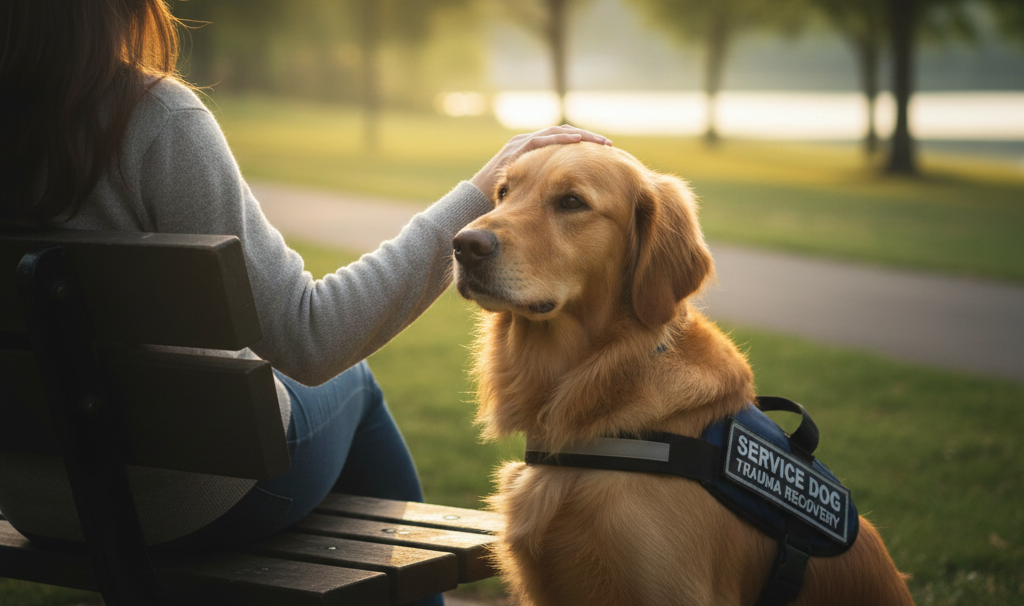
Service dogs for trauma recovery provide life-changing support for veterans and first responders coping with the long-term effects of traumatic experiences. Through trained canine assistance, these dogs help restore emotional stability, confidence, and independence in daily life.
Service dogs play a critical role in helping veterans and first responders recover from trauma by providing stability, structure, and real time support. These dogs are not companions alone. They are trained partners who respond to emotional and physical cues, helping their handlers regain confidence, independence, and a sense of safety in everyday life.
At Canines for Heroes, the mission is rooted in the belief that healing should be accessible, long term, and deeply personal. Through professional training and thoughtful placement, service dogs become a bridge between trauma and recovery.
Understanding Trauma Recovery for Veterans and First Responders
Trauma does not always announce itself immediately. Many veterans and first responders continue functioning for years before symptoms fully surface. Repeated exposure to emergencies, violence, injury, and loss can gradually overwhelm the nervous system.
Common effects of trauma include:
Persistent anxiety or panic attacks
Hypervigilance and constant alertness
Difficulty sleeping or recurring nightmares
Emotional numbness or withdrawal
Irritability or mood changes
Difficulty concentrating
Avoidance of crowds or public spaces
These symptoms can interfere with work, relationships, and personal well being. Many individuals struggle silently, believing they should be able to manage on their own.
Why Trauma Can Be Difficult to Treat
Traditional treatments such as therapy and medication are essential tools, but trauma recovery is not the same for everyone. Some individuals find it difficult to apply coping strategies during moments of high stress. Others experience symptoms that arise suddenly without warning.
Trauma affects the body as much as the mind. The nervous system may remain in a heightened state of alert, responding to perceived threats even in safe environments. This is where service dogs offer unique support.
How Service Dogs Support Trauma Recovery Every Day
Service dogs are trained to recognize subtle changes in their handler’s body language, posture, breathing, and behavior. These cues often appear before emotional or physical symptoms escalate.
Tasks may include:
Interrupting anxiety or panic episodes
Providing grounding through touch or pressure
Alerting handlers to rising stress levels
Waking handlers from nightmares
Creating physical space in crowded environments
Guiding handlers to exits when overwhelmed
This immediate response helps regulate the nervous system and prevents symptoms from intensifying.
Restoring a Sense of Safety
One of the most significant challenges trauma creates is the loss of safety. Many veterans and first responders feel constantly on edge, even at home. Service dogs help restore a sense of security by remaining alert while allowing their handler to relax.
Handlers often report:
Feeling safer in public spaces
Reduced fear when leaving home
Improved sleep quality
Greater confidence navigating daily life
Knowing a trained partner is present helps the brain shift out of survival mode.
Emotional Regulation Through Consistent Support
Trauma can cause emotions to feel unpredictable and overwhelming. Service dogs provide consistent responses that help stabilize emotional reactions.
Daily interactions with a service dog help:
Regulate breathing and heart rate
Reduce emotional escalation
Encourage calm responses to stress
Create predictability and structure
Over time, these interactions support emotional resilience and confidence.
The Importance of Routine in Recovery
Routine is a powerful tool in trauma recovery. Service dogs naturally create structure through daily care, training reinforcement, exercise, and bonding.
Routine helps by:
Reducing uncertainty
Encouraging responsibility
Supporting healthy sleep patterns
Creating daily purpose
These small routines build a foundation for long term stability.
Supporting Independence and Confidence
Trauma can limit independence by making everyday activities feel unsafe or overwhelming. Service dogs help restore independence by providing reliable support in real world situations.
With a service dog, many handlers regain the ability to:
Go shopping or attend appointments
Travel or socialize
Return to work or volunteering
Participate in family activities
This renewed independence often marks a turning point in recovery.
The Impact on Families and Relationships
Trauma affects not only the individual, but also their family. Loved ones may struggle to understand emotional changes, withdrawal, or anxiety episodes.
Service dogs often help families by:
Reducing symptom intensity
Providing reassurance during stressful moments
Improving emotional regulation
Creating a calmer home environment
When one person heals, the entire family benefits.
Medical and Emotional Support Working Together
Some veterans and first responders experience medical conditions alongside trauma, such as anxiety induced fainting, heart irregularities, or dissociation. Certain service dogs are trained to assist with both emotional and medical needs.
Medical related tasks may include:
Detecting physical changes before an episode
Alerting handlers to sit or seek help
Retrieving medication
Providing physical stability
This combined support increases safety and peace of mind.
From Rescue Dog to Service Partner
At Canines for Heroes, many service dogs begin their journey as rescue dogs. These dogs may have faced abandonment or uncertainty, yet they often possess the qualities needed for service work.
Through training and care, they become:
Focused working partners
Trusted companions
Lifesaving support systems
This transformation reflects the heart of the mission.
One dog. Two lives changed.
Long-Term Benefits of Service Dogs for Trauma Recovery
Service dogs are not a short term solution. Their impact often deepens over time as trust grows and skills strengthen.
Long term benefits include:
Reduced trauma related symptoms
Improved emotional regulation
Better sleep quality
Increased social engagement
Greater quality of life
Many handlers describe their service dog as the foundation of their recovery.
Why Canines for Heroes Trains Service Dogs for Trauma Recovery
Canines for Heroes focuses on long term success rather than quick placement. Each partnership is built through professional training, careful matching, and continued support.
The program emphasizes:
Rescue based service dog training
Individualized handler matching
Trauma informed training methods
Ongoing support after placement
Healing is viewed as a journey, not a finish line.
How the Community Can Help
Training service dogs requires time, expertise, and resources. Community support makes this mission possible.
You can help by:
Sponsoring a service dog
Making a tax deductible donation
Supporting training programs
Sharing awareness
Every contribution helps another hero take a step toward healing.
FAQ: Service Dogs and Trauma Recovery
How do service dogs help with trauma recovery
Service dogs provide grounding, interrupt anxiety, support emotional regulation, and offer consistent daily assistance.
Are service dogs a replacement for therapy
No. Service dogs work alongside therapy and medical care to provide real time support.
How long does it take to adjust to a service dog
Many handlers notice positive changes within weeks, with continued improvement over time.
Do service dogs help families as well
Yes. Families often report reduced stress and improved emotional stability.
Can first responders apply for a service dog
Yes. Eligible veterans and first responders may apply through Canines for Heroes.
What happens when a service dog retires
Retired service dogs often remain with their handler as companions, and future support options are discussed.
Conclusion
Trauma recovery is not about forgetting the past. It is about learning how to live fully in the present. Service dogs provide veterans and first responders with consistent support that helps restore confidence, independence, and hope.
At Canines for Heroes, no hero walks this path alone. Through trained service dog partnerships, healing becomes possible one step at a time.
Donate now and support the training of service dogs for trauma recovry through Canines for Heroes.